Likrawkra has launched a new book.
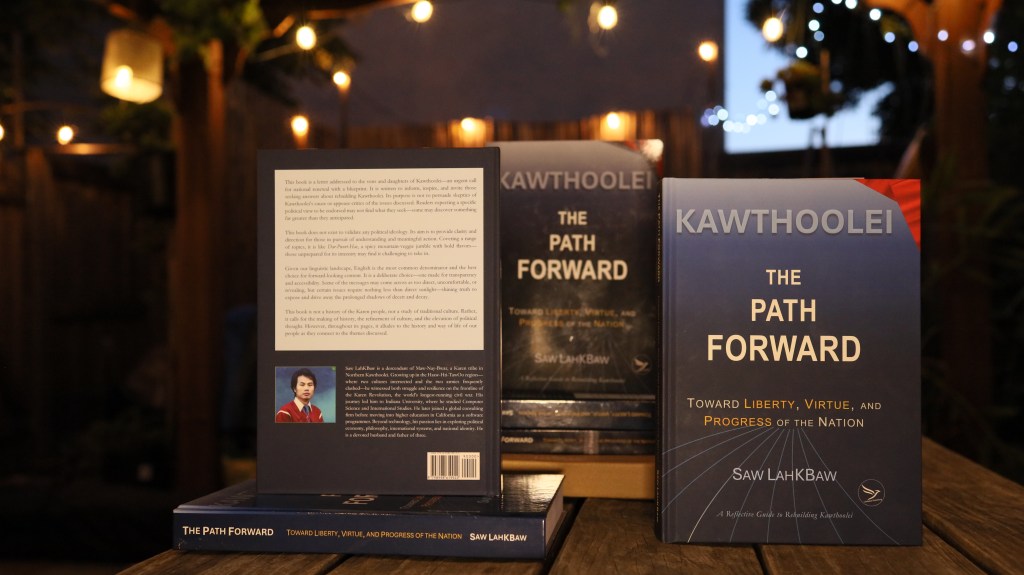
Available in
Amazon.com |
Lulu.com |
BarnesAndNoble.com |
play.google.com ebook |
paperback | hardcover | kindle | ebook | audio book
Explore the vision and ideas that inspire a brighter future.
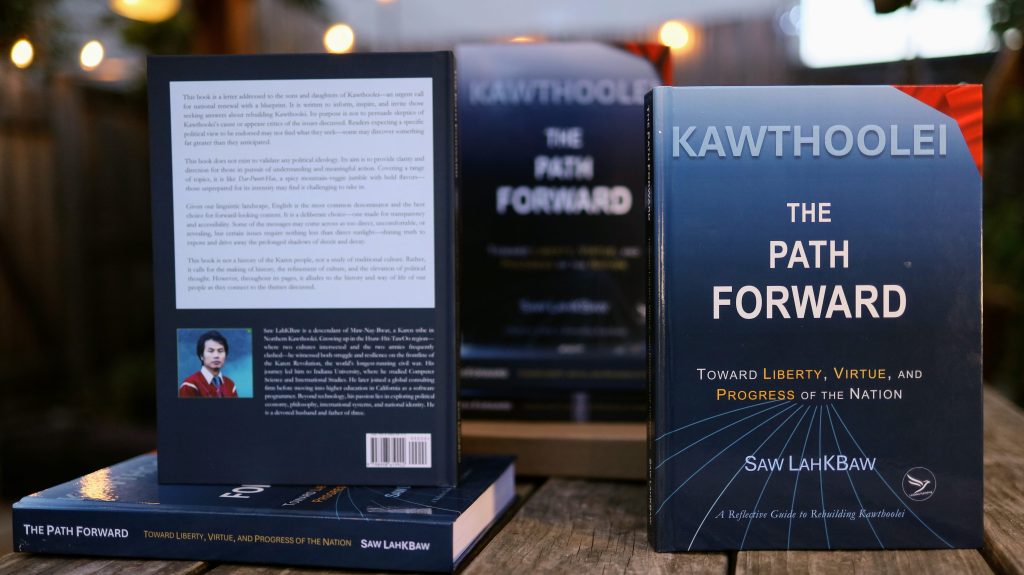
Available in
– Paperback and Hardcover: (370 Pages, Size: 7 by 10 inches)
- amazon.com
– Hardcover in cream paper, B&W contents (ISBN: 979-8-9986199-1-5)
– Paperback white paper color contents (ISBN: 979-8-9986199-0-8)
– Kindle (ISBN: 979-8-9986199-3-9)
>> - lulu.com
– Hardcover, Standard Color, 80# White — Coated, Case Wrap, Glossy Cover (ISBN: 979-8-9986199-2-2)
>> - barnesandnoble.com
– Hardcover, Standard Color, 70# White, Matte Cover (ISBN: 979-8-9986199-2-2)
– Paperback, Standard Color, 70# White, Glossy Cover (ISBN: 979-8-9986199-0-8)
>> - books.google.com
– Ebook (ISBN: 9798998619939)
– Audiobook (GGKEY:1T8UZLPSCYF) duration: 14 hr 43 min,
AI-narrated by Martin (from Google)
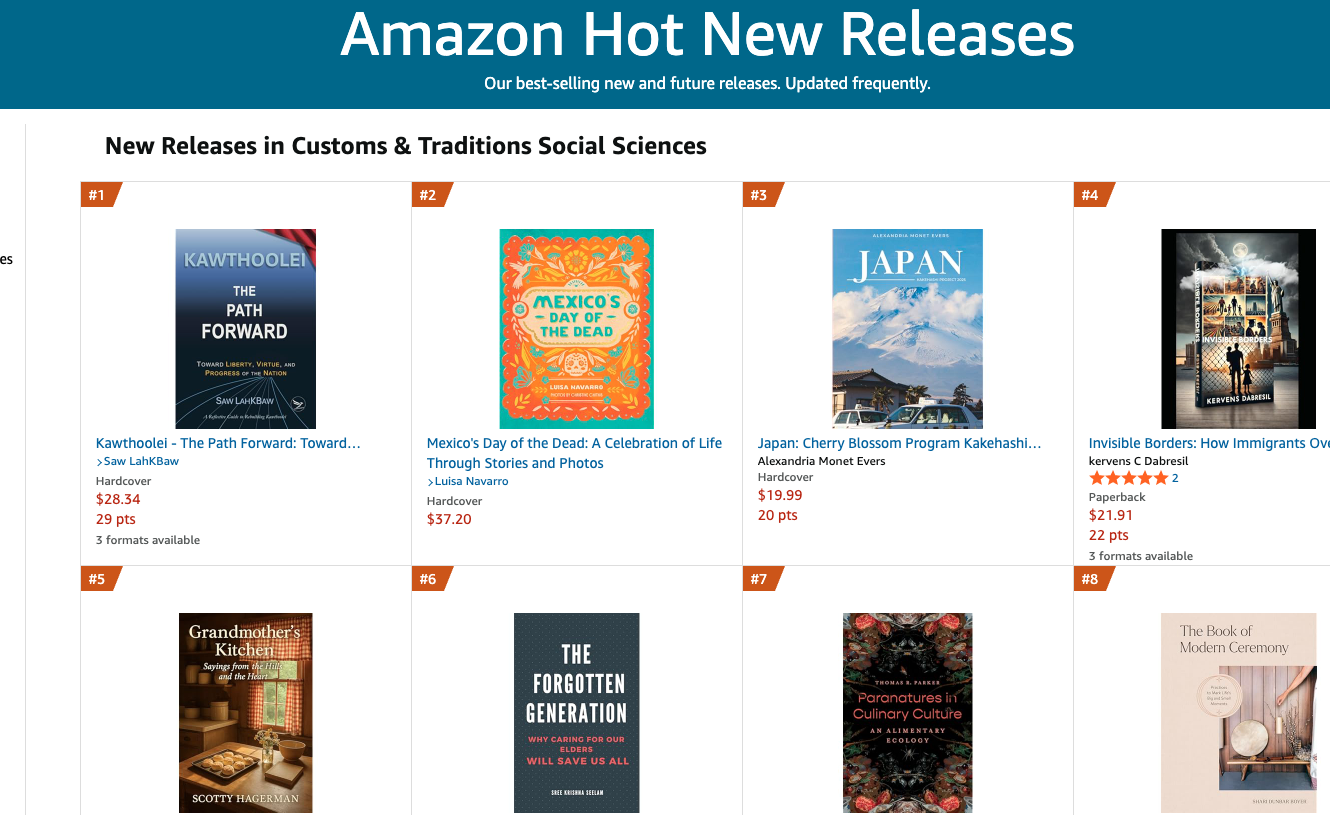
Top New Release in Custom & Traditions Social Science in Amazon book store (June 2, 5, 6, 7, 2025)
– For wholesale ordering (libraries and bookstores): shop.ingramspark
ISBN: 979-8-9986199-4-6 (Hardcover color content)

– Apple Books app
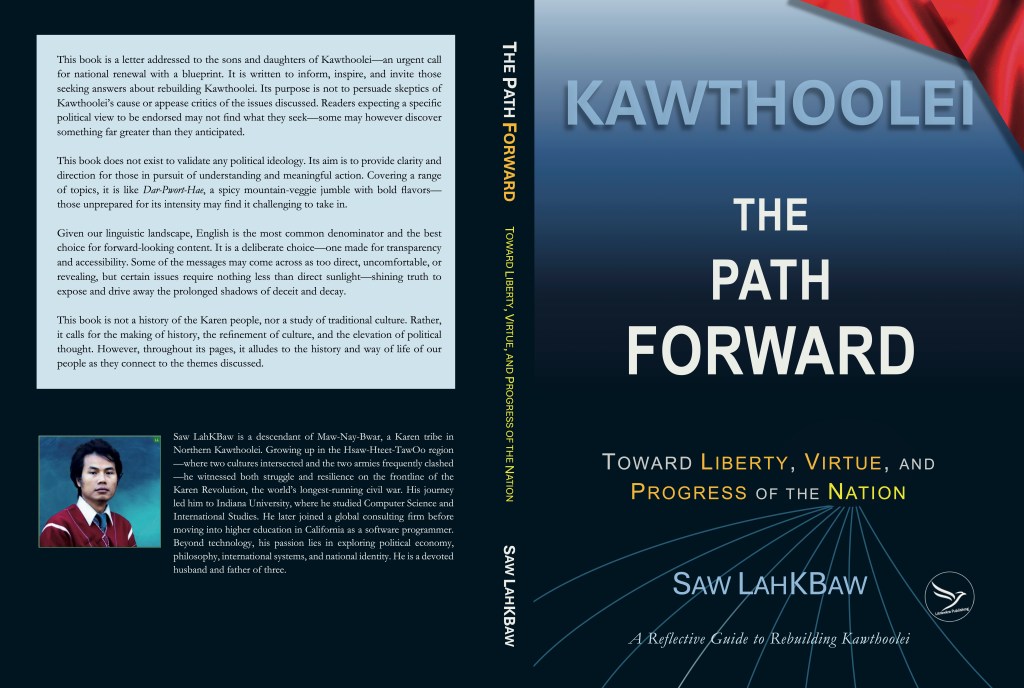
Full Book Cover
Book Description
A Reflective Guide to Rebuilding Kawthoolei
This book is a letter addressed to the sons and daughters of Kawthoolei—an urgent call for national renewal with a clear blueprint for action.
This book is written to inform, inspire, and invite those seeking answers about rebuilding Kawthoolei. It is not intended to persuade skeptics of Kawthoolei’s cause or appease critics of the issues discussed. Readers looking for a specific political endorsement may not find what they seek—some may discover something far greater than they expected.
This work does not exist to validate any political ideology. Its aim is to provide clarity and direction for those in search of understanding and meaningful action. Covering a range of topics, it is like Dar-Pwort-Hae—a spicy mountain-vegetable jumble with bold flavors. Those unprepared for its intensity may find it challenging to take in.
Given the linguistic landscape, English is the most common denominator and the best choice for forward-looking content. This is a deliberate decision—made for transparency and accessibility. Some messages may seem too direct, uncomfortable, or confronting, but certain issues demand nothing less than direct sunlight—shining truth to expose and drive away the prolonged shadows of deceit and decay.
This is not a history of the Karen people, nor a study of traditional culture. It is a call to make history, refine culture, and elevate political thought. Yet throughout its pages, the history and way of life of the Karen people serve as a grounding presence, connecting the themes discussed to the lived experience of a nation in the making.
Drawing from the Karen people’s journey, their social and political challenges, and hard-won lessons from Singapore, South Korea, Israel, Taiwan, Thailand, and the United States, Saw LahKBaw sets forth the view that disciplined governance, rigorous STEM education, and an enterprising economy can turn hardship into sustainable progress. Exposing the dangers of ideological dependency and internal division, he highlights the enduring power of communal virtue and cultural confidence. With clear frameworks, vivid borderland vignettes, and actionable policies, this work delivers a compelling message: lasting freedom comes from character, competence, and the courage to build a future worthy of respect on the world stage.
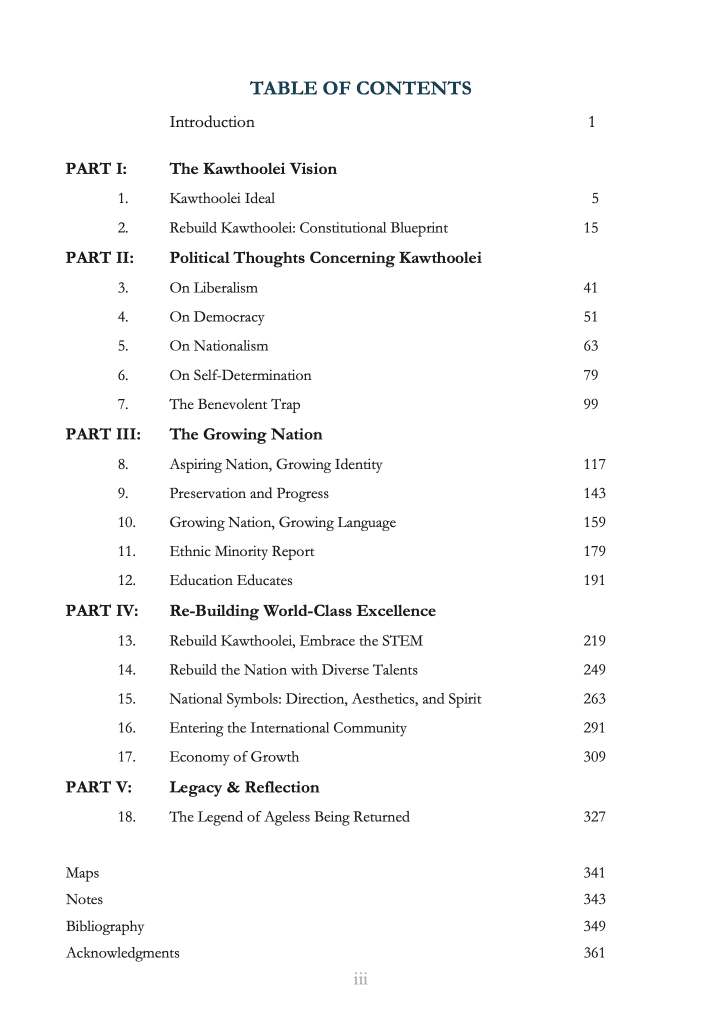
Introduction to the book
This book is a letter to my people—the sons and daughters of Kawthoolei.
It was born of quiet reflection and heartfelt conversations with those who carry both the burden and the dream of Kawthoolei. Writing it was a journey of perseverance, tested by interruptions both anticipated and unexpected—challenges that mirrored the broader struggles of our people. Like our community, the work pressed on. Though many forces tried to bring it to a grinding halt, it moved—steadily—forward.
All around, I see many, except those who content with the status quo, growing restless with the state of our political and social stagnation. Voices of unease rise—on the ground and in the air—lamenting our disoriented course, yet a clear path forward has not been charted—one that is visible, viable, and grounded in the will of the people and the survival of the nation.
In the stillness of sleepless nights—within a solitary refuge, far removed from the daily trials of survival—these thoughts gradually took shape, forming a message meant for my people. Not all the ideas within are the product of deliberate search, but of thoughts and visions that arrived unbidden, illuminating what Kawthoolei can become. I am grateful to share this book, shaped by that sense of purpose, on my own terms.
To be clear, this book is not a history of the Karen people, nor a study of traditional culture. Rather, it calls for the making of history, the refinement of culture, and the elevation of political thought. Nevertheless, throughout its pages, I allude to the history and way of life of our people as they connect to the themes discussed.
This book is written to inform, inspire, and invite those seeking answers about rebuilding Kawthoolei. Its purpose is not to persuade skeptics of Kawthoolei’s cause or appease critics of the issues discussed. Also, readers expecting a specific political view to be endorsed may not find what they seek—some may discover something far greater than they anticipated.
This book does not exist to validate any political ideology. Its aim is to provide clarity and direction for those in pursuit of understanding and meaningful action. Covering a range of topics, it is like Dar-Pwort-Hae, a spicy veggie jumble mountain dish with bold flavors—those unprepared for its intensity may find it challenging to take in.
This book stands as a humble offering to the people of Kawthoolei. I have aimed to make it accessible for both those for whom English is a second language and those who speak it daily. Given our linguistic landscape, English is the most common denominator and the best choice for forward-looking content. It is a deliberate choice—one made for transparency and accessibility.
Some of the messages may come across as too direct, uncomfortable, or revealing, but certain issues require nothing less than direct sunlight—shining truth to expose and drive away the prolonged shadows of deceit and decay. For those interested in political philosophy, the chapters in the Political Thoughts Concerning Kawthoolei section explore the ideological challenges Kawthoolei faces.
This project is a collaboration between human creativity and machine intelligence. Modern tools assisted in streamlining the writing process—enhancing efficiency, refining grammar, and improving sentence flow. Yet, the ideas, content, literary style, voice, and tone are entirely my own and any shortcomings remain my sole responsibility.
This project grew from the goodwill and voluntary contributions of the community—those who gave their time to review draft chapters, driven by their belief in the importance of this work. Some needed gentle nudges, while most found joy in the process, discovering meaning as the raw edges of an early draft came to life. Yet, there were some who showed little interest in Kawthoolei—a reminder that this mission must be accomplished, for if Kawthoolei were already a prevailing wind, this book would not need to be written.
This project was undertaken without external funding. While I deeply appreciate the goodwill of those who offered their support, I chose not to seek financial assistance. The journey of writing and publishing this book has been monumental, yet I believed it best to take full responsibility—both creatively and financially. This choice allowed me to preserve the independence needed to shape these pages with sincerity and integrity.
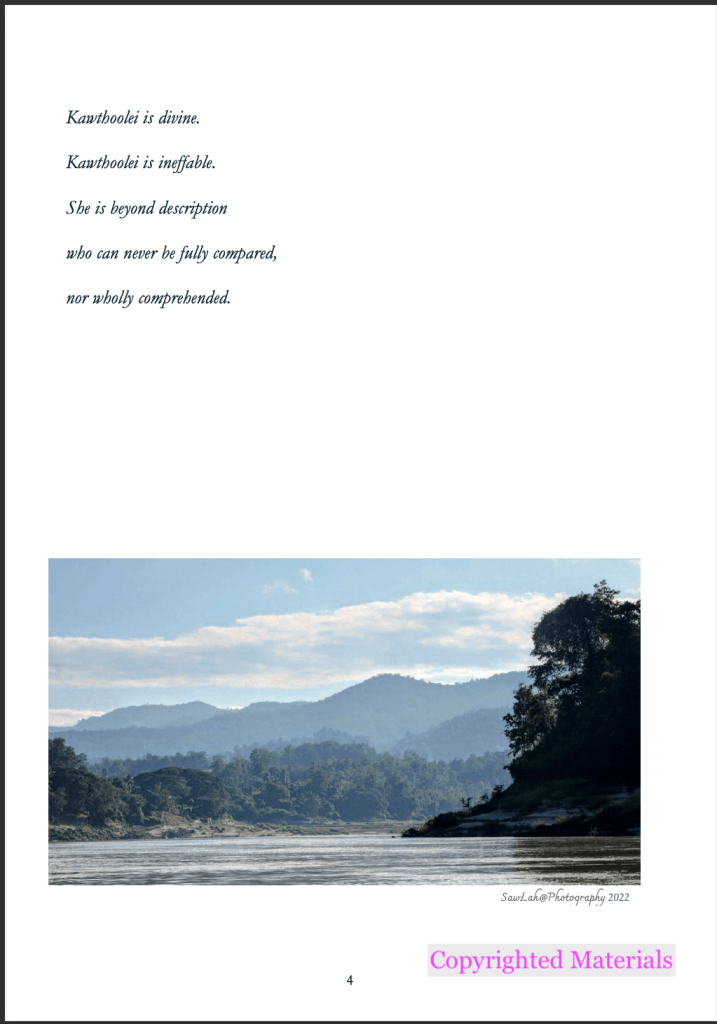
This book was born from ideas that demanded a more expansive format than my usual online platforms could offer. Its chapters unfold in a deliberate progression—from Kawthoolei’s ideals and political philosophy to the pursuit of a national identity rooted in dignity and progress, to the role of STEM education, cutting-edge technology, and the emerging economy, and finally, to the practical aspirations and actions needed to bring those visions to life. Each chapter builds upon the previous one and is intended to be read sequentially. However, each chapter is also self-contained, allowing readers to begin with any topic that resonates with them.
Together, these chapters explore the challenges we face and offer a blueprint for rebuilding a nation that leaves a lasting legacy—a better world for future generations—while acknowledging our fleeting time in this complex world.
Saw LahKBaw (2025)
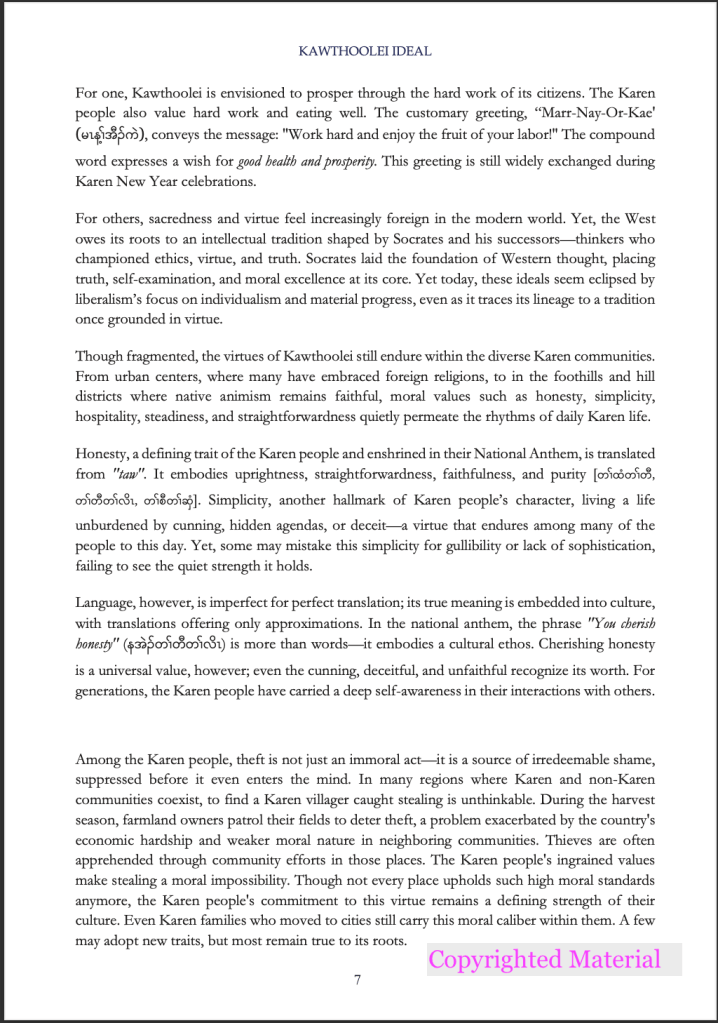
Chapter One
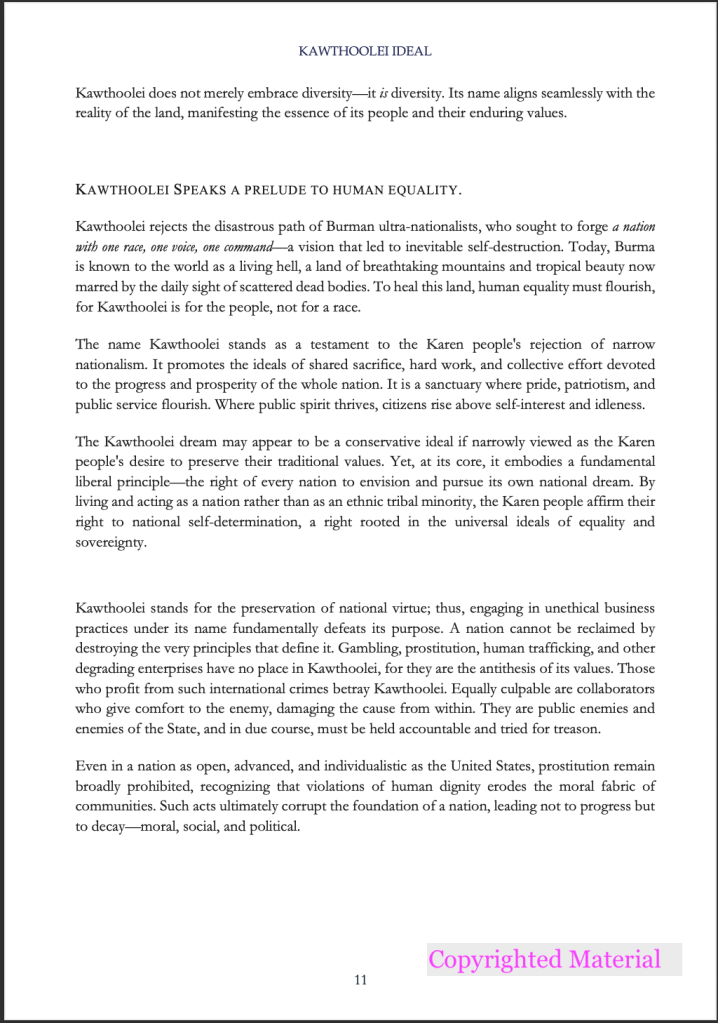
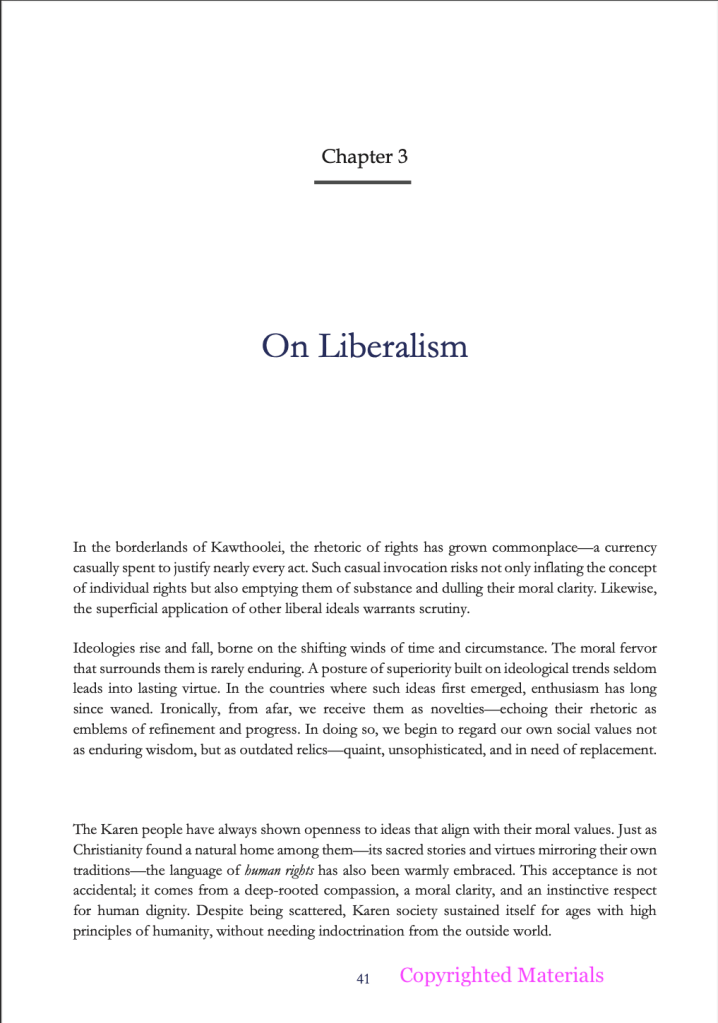
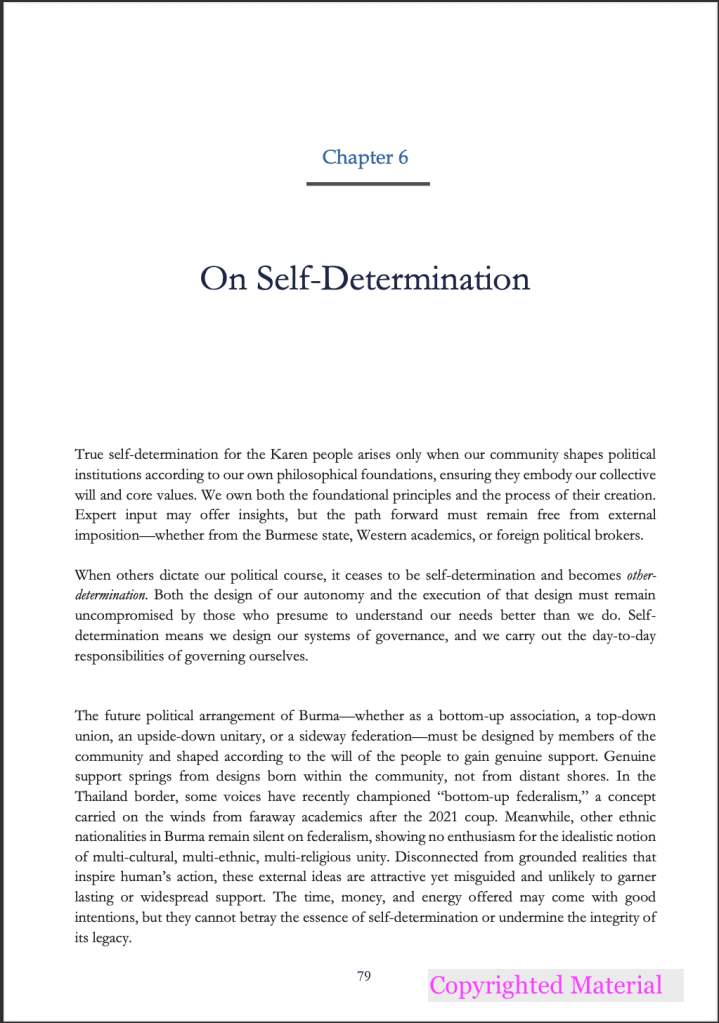
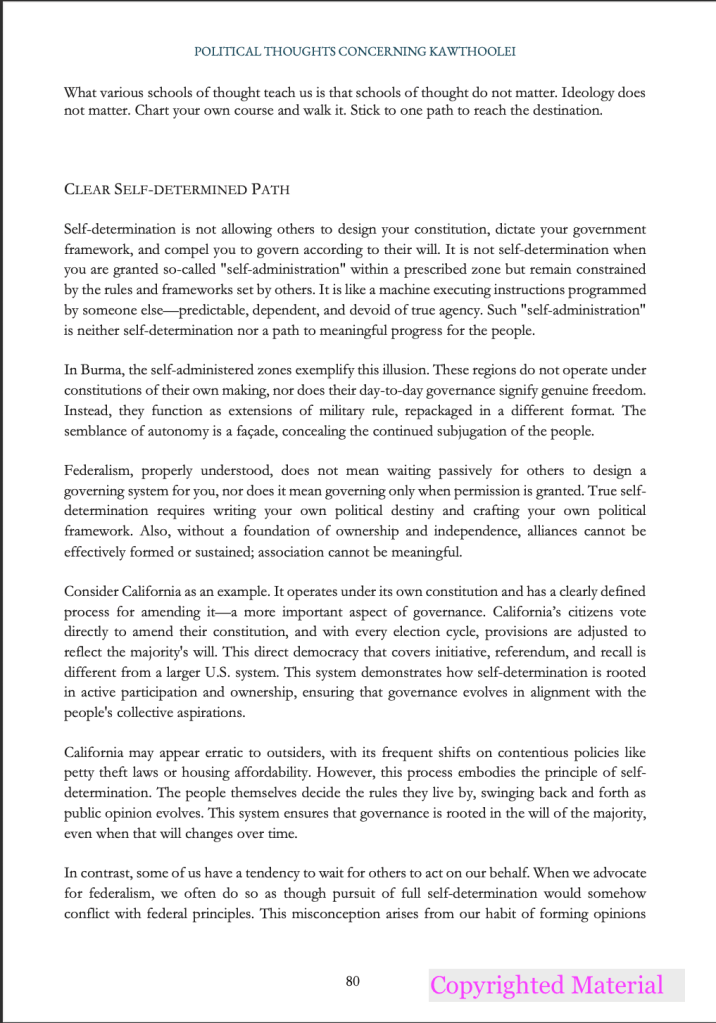
This is a sample reading from Chapter One.
For full Information on the book, follow The Path Forward.
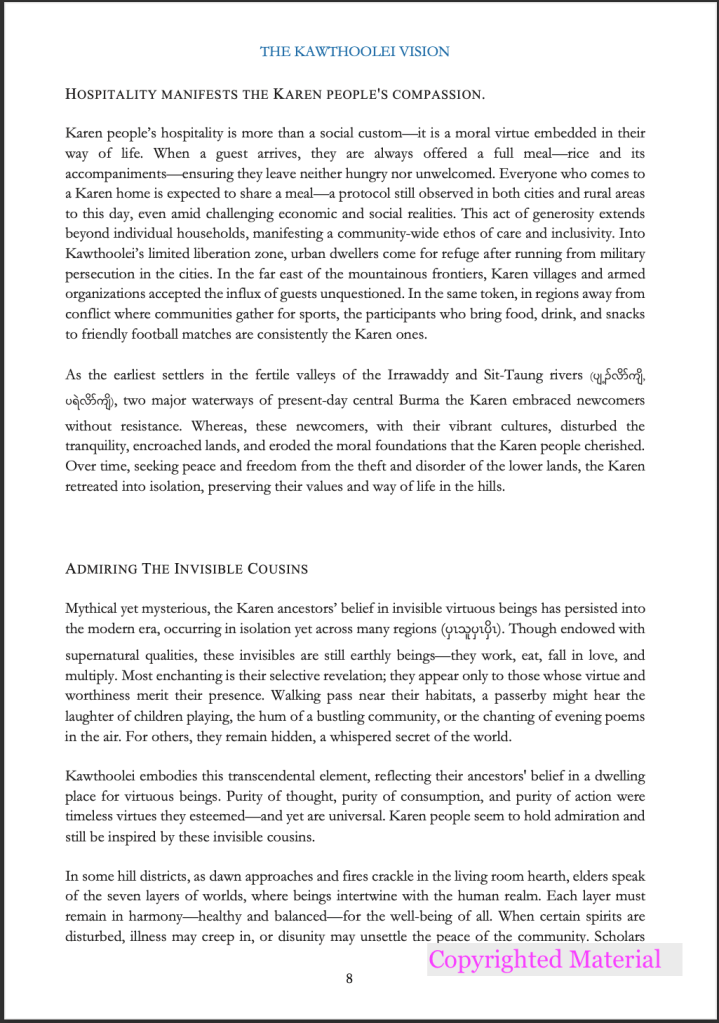
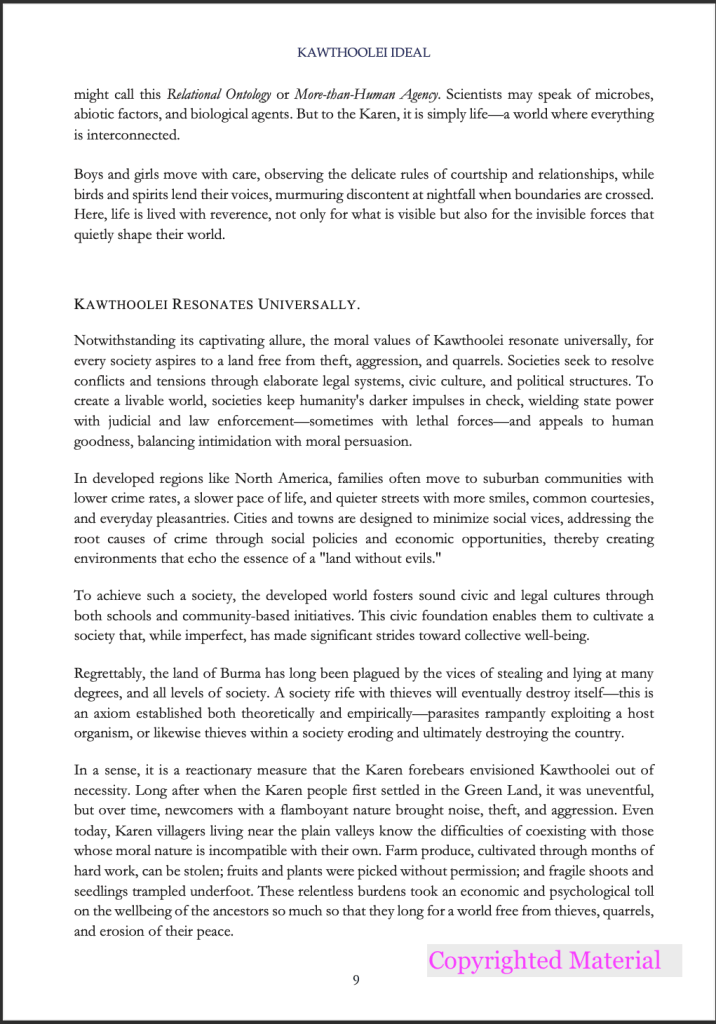
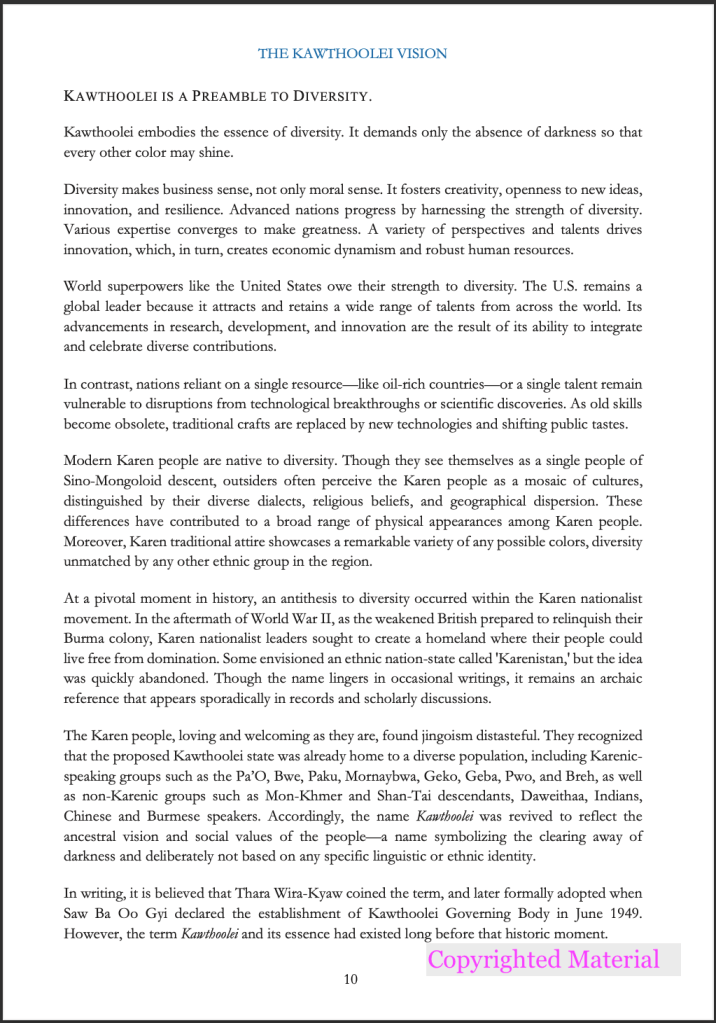
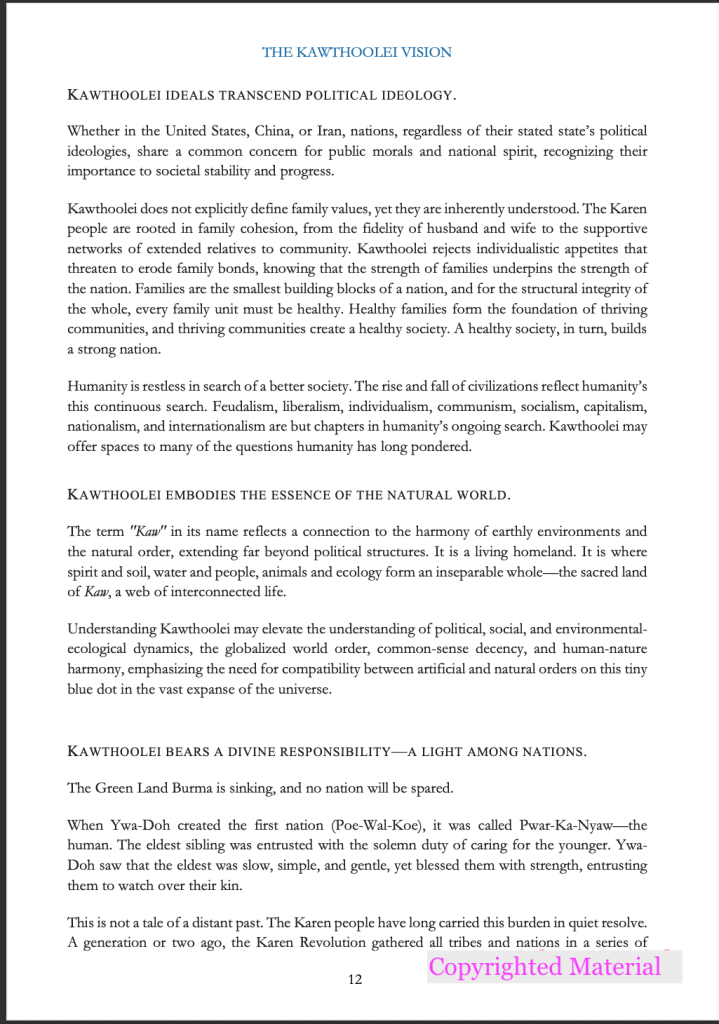
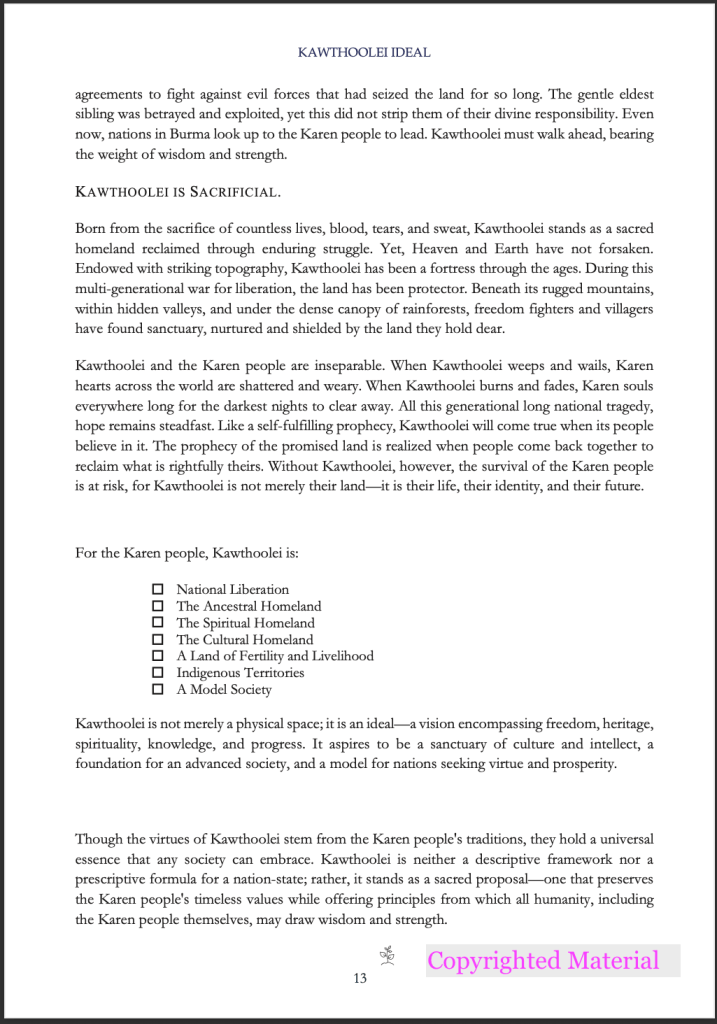
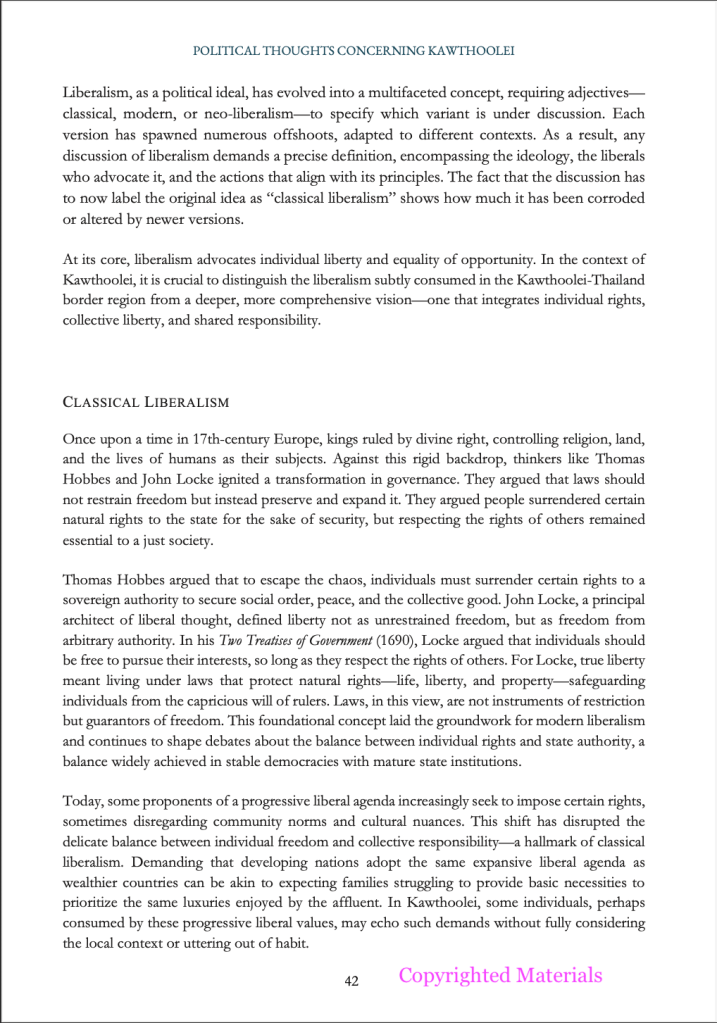
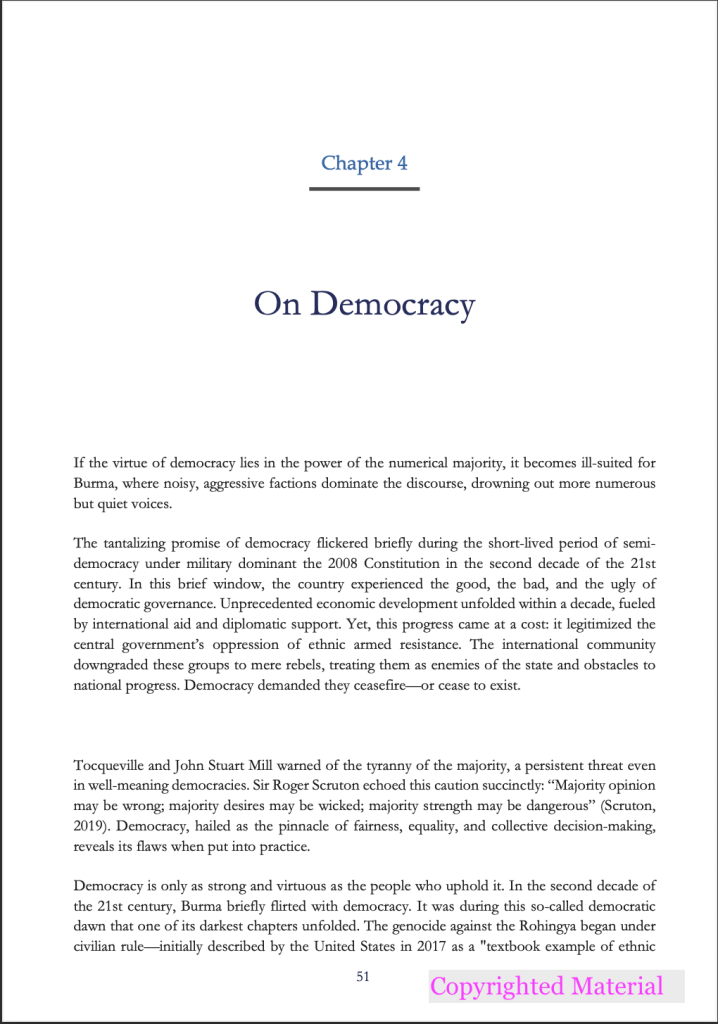
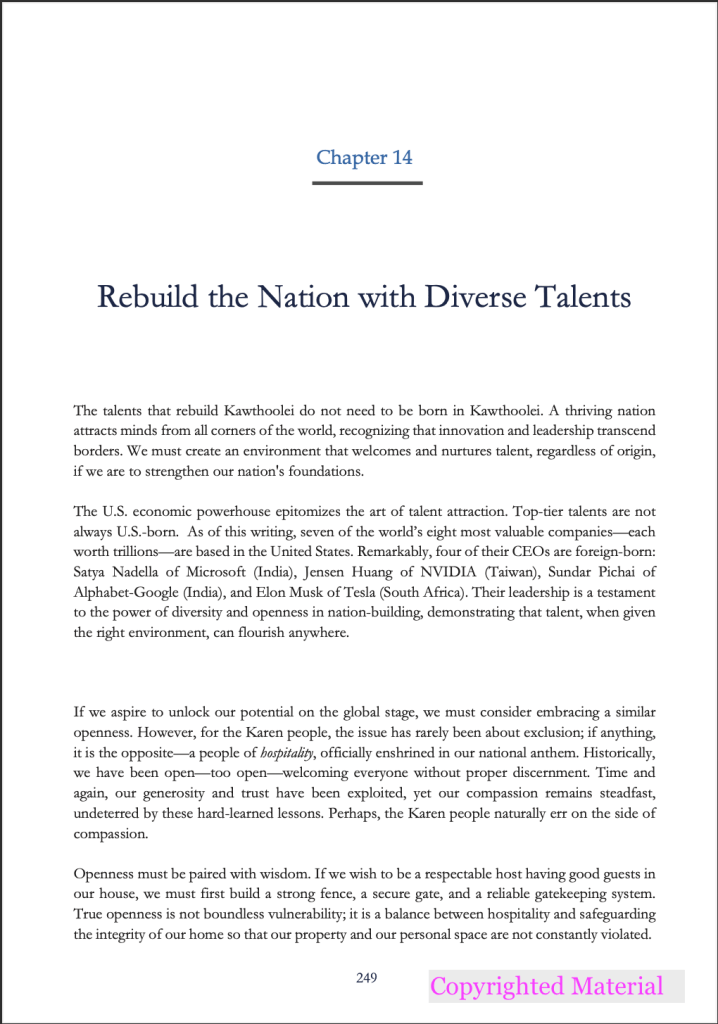
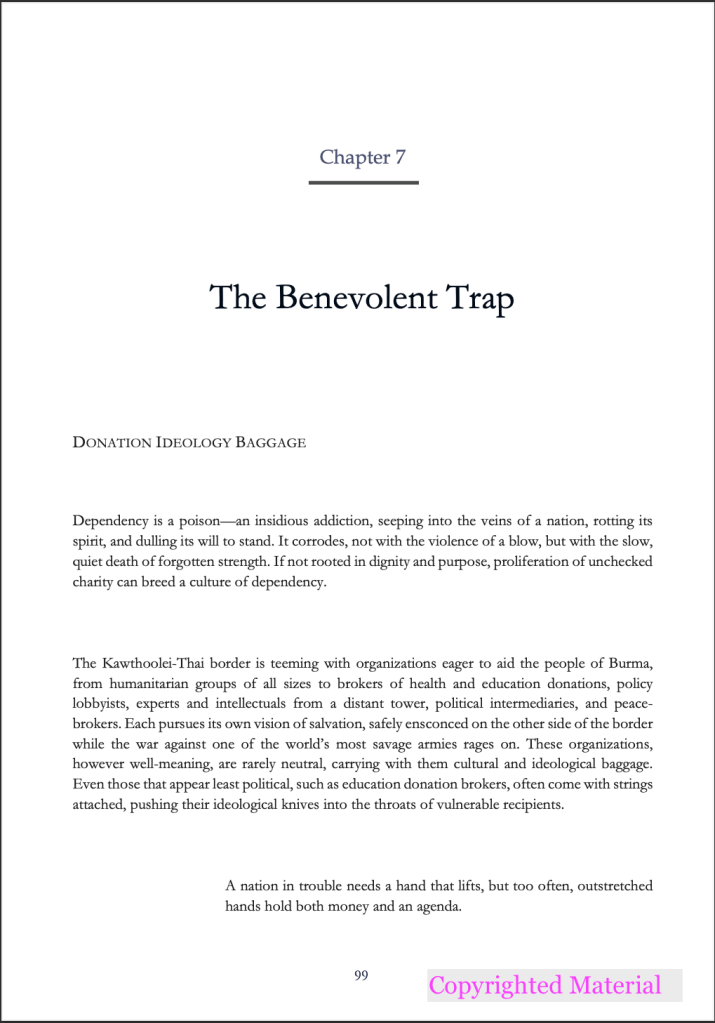
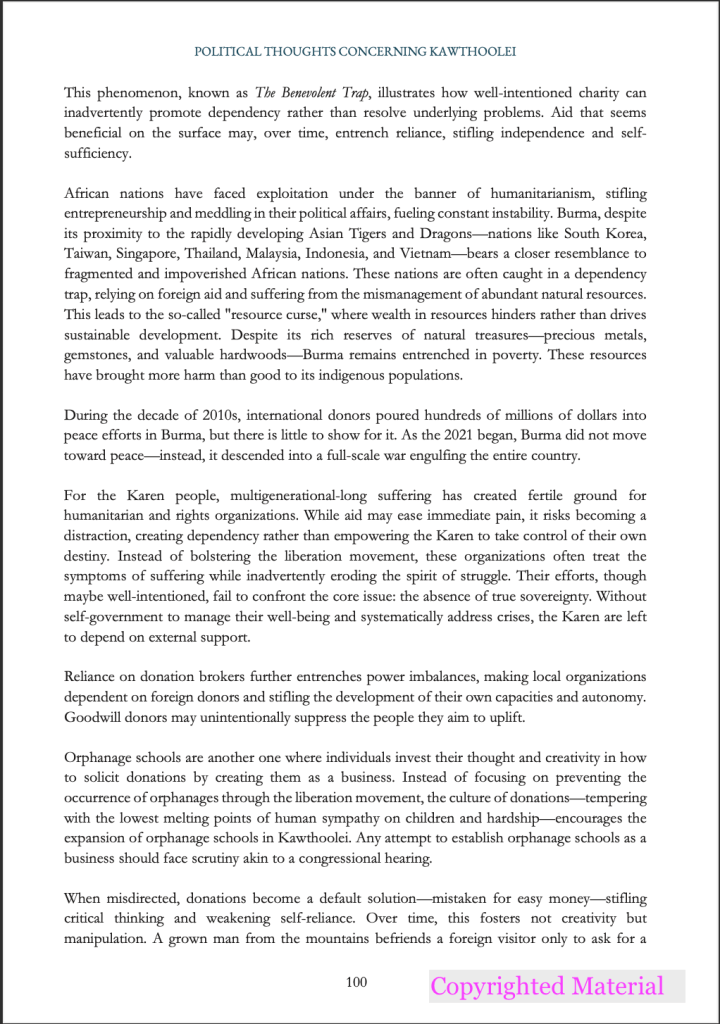
Have sample reading from selected chapters.
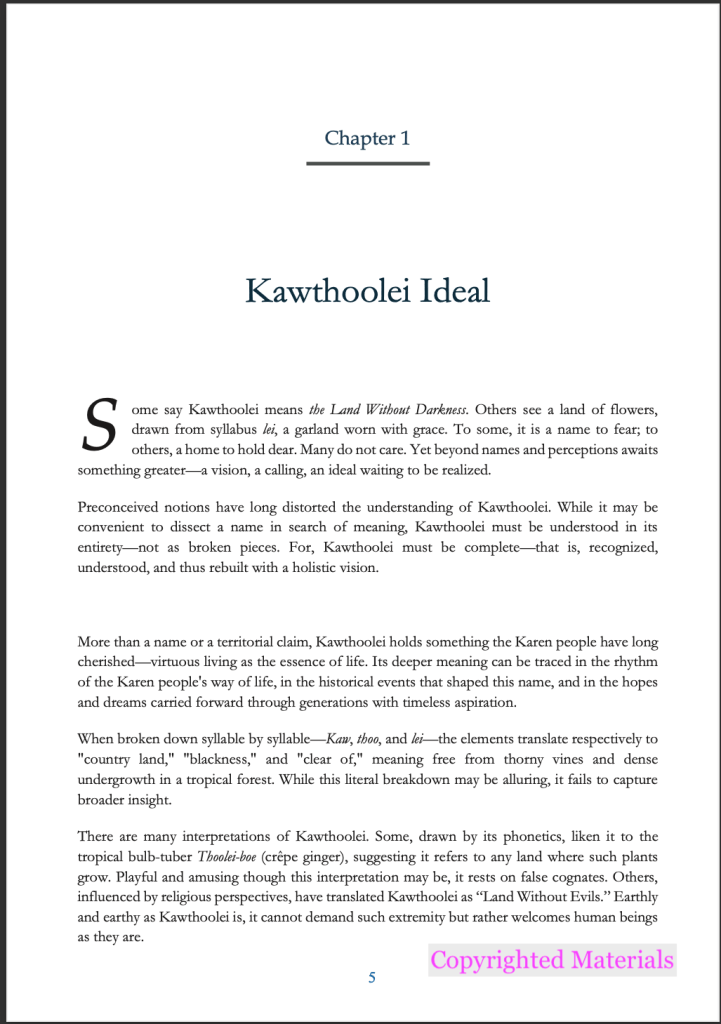
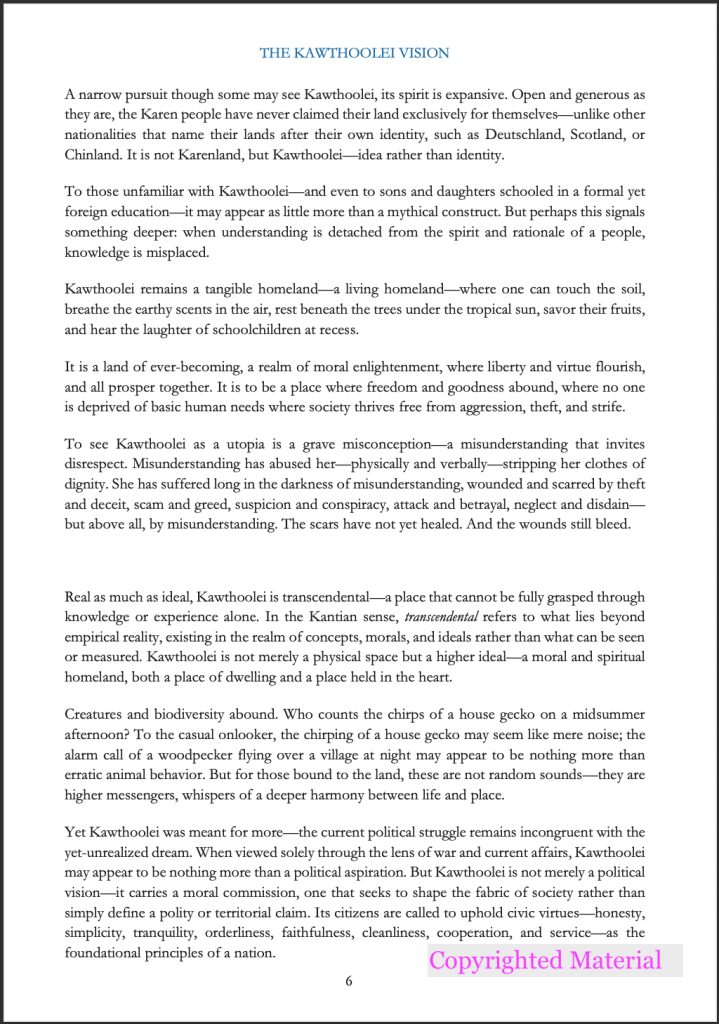
More Sample Reading…
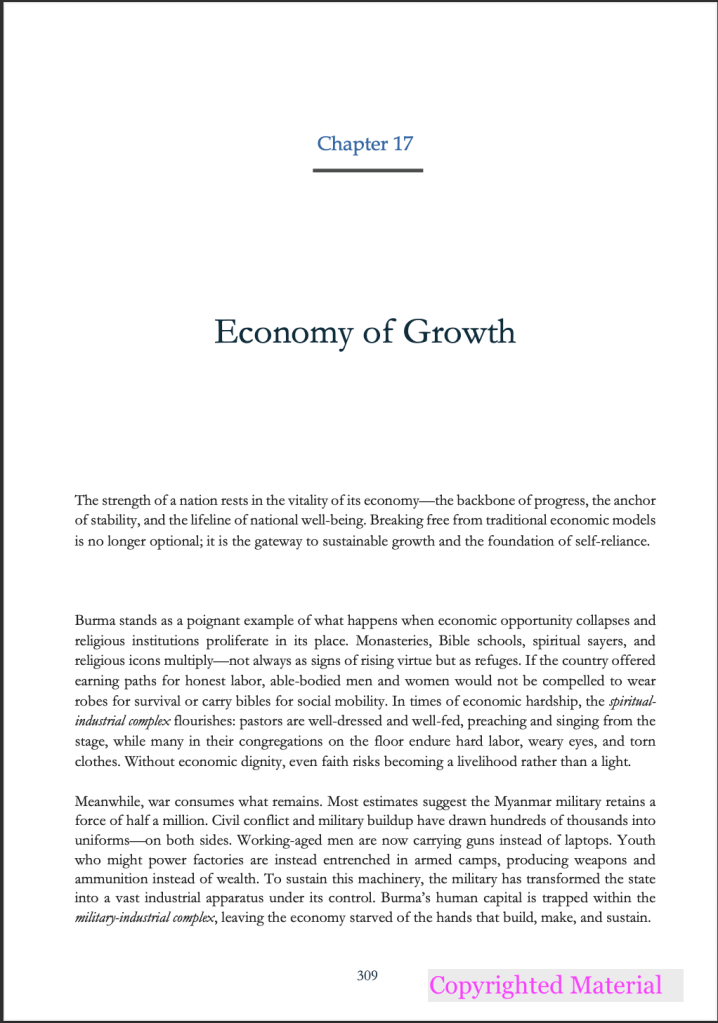
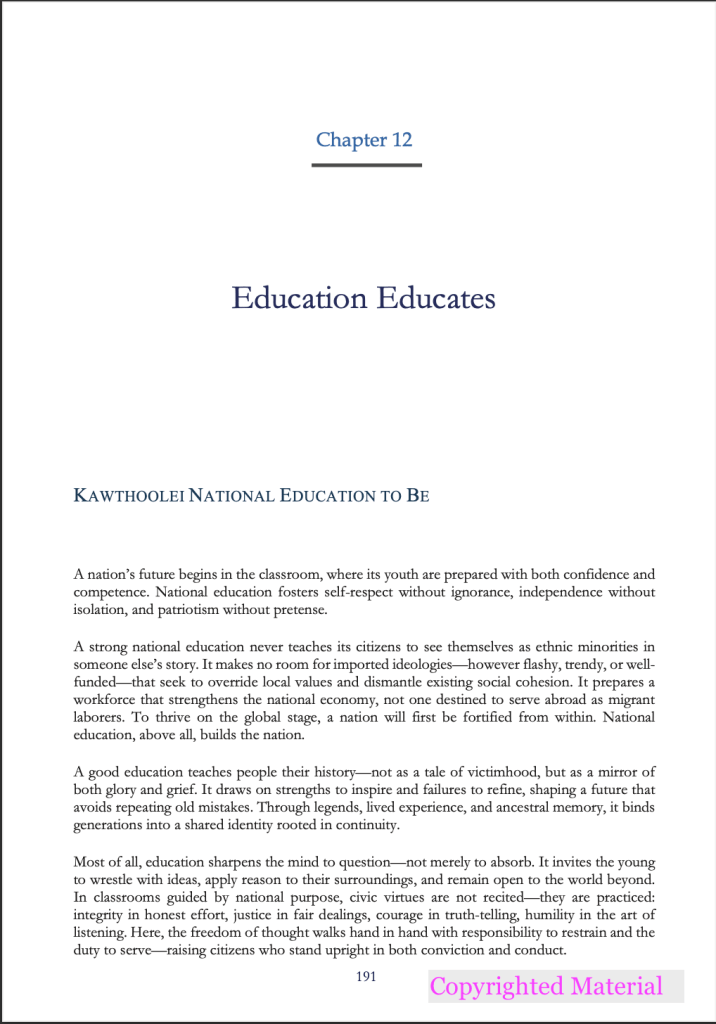
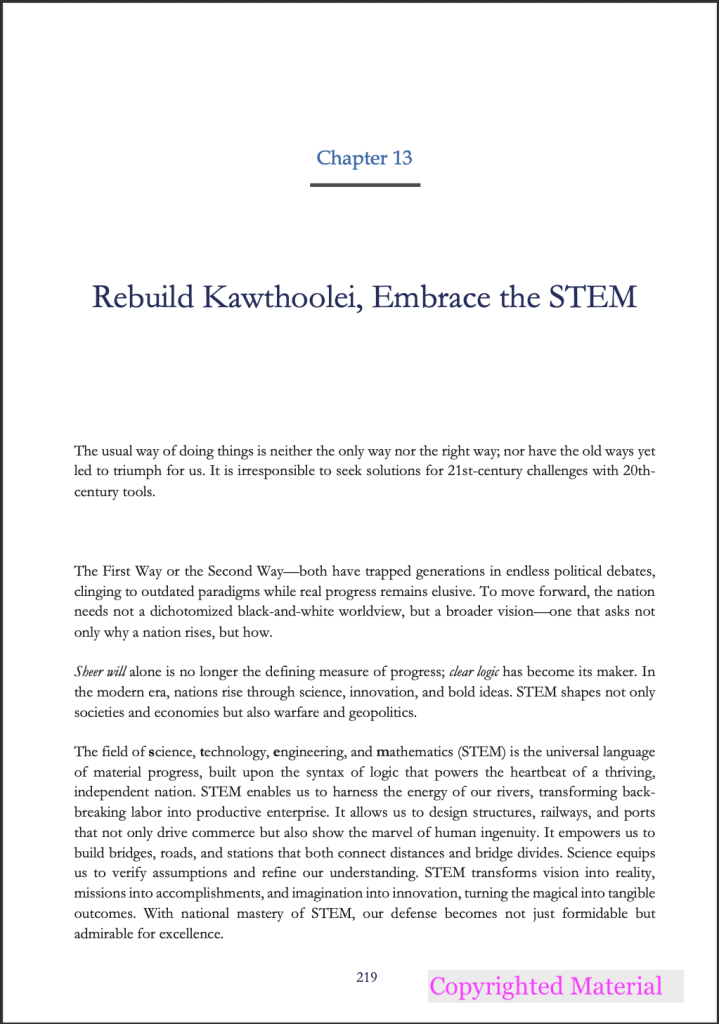
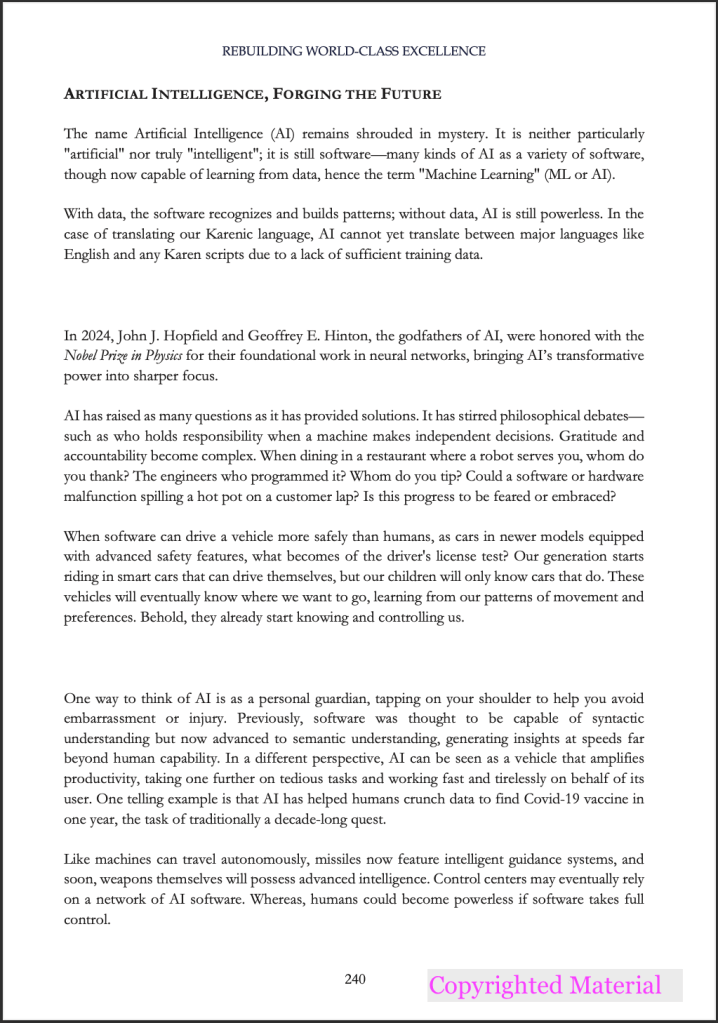
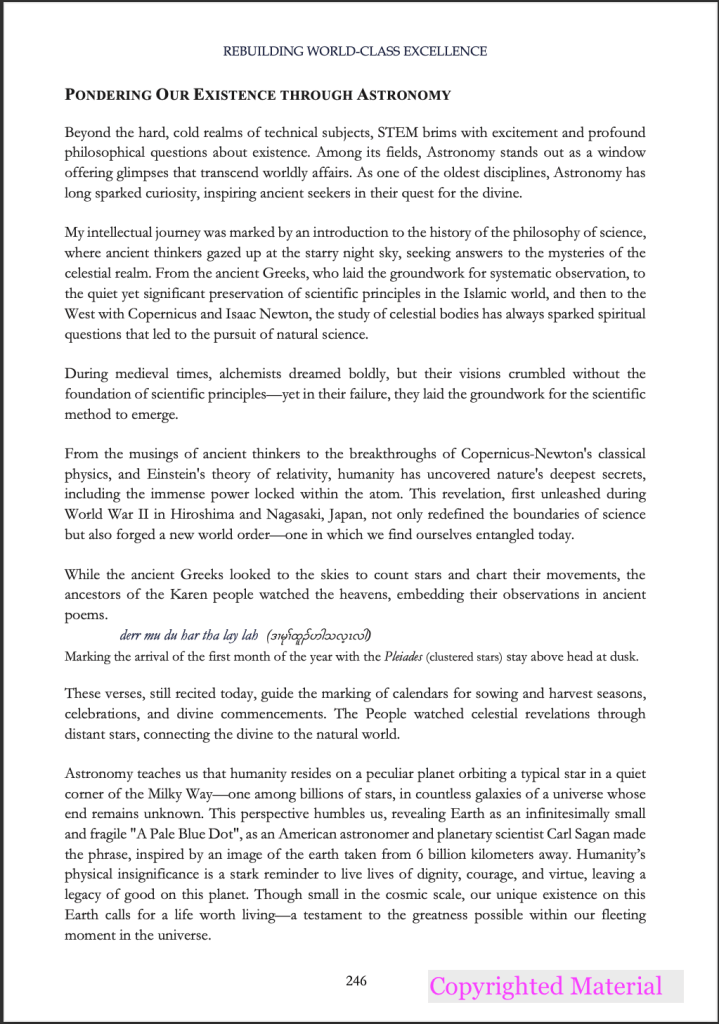
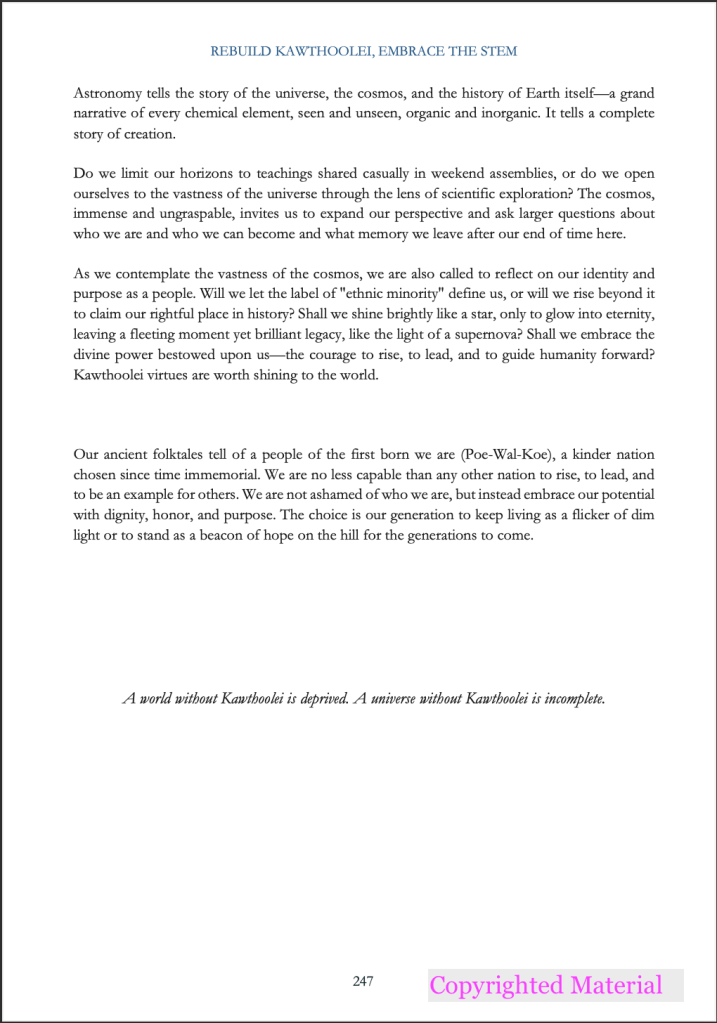
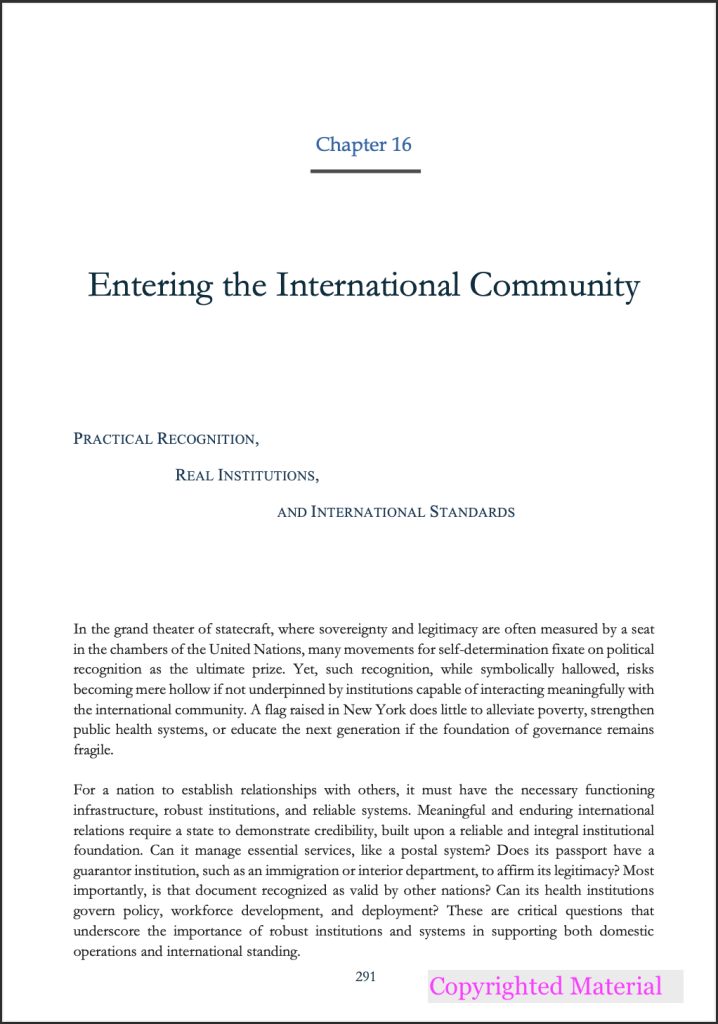
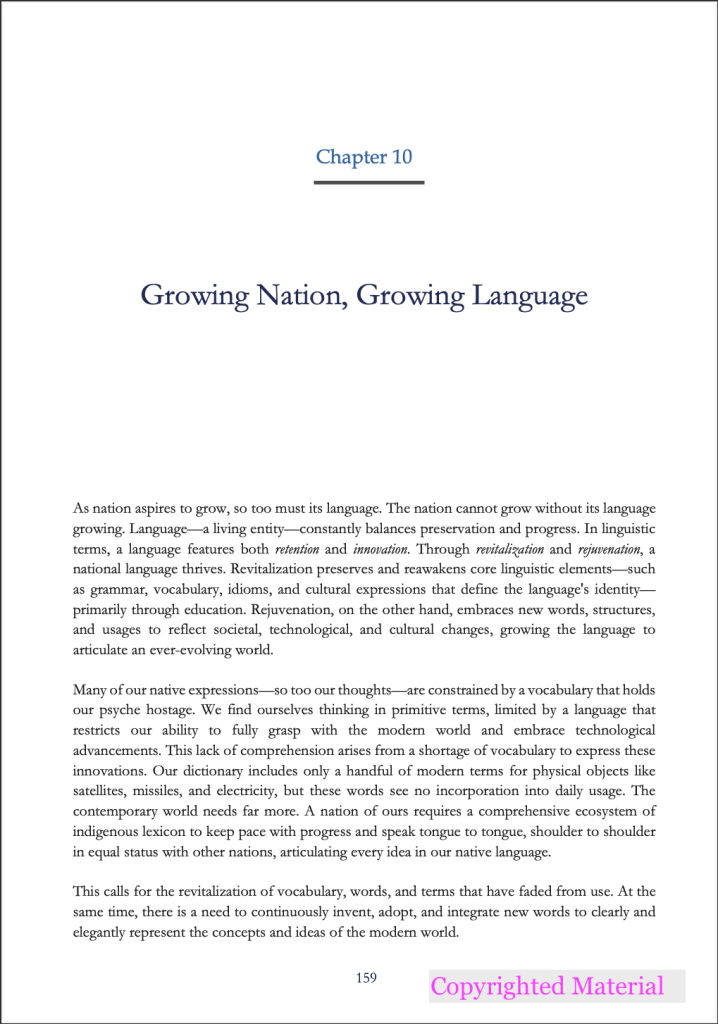
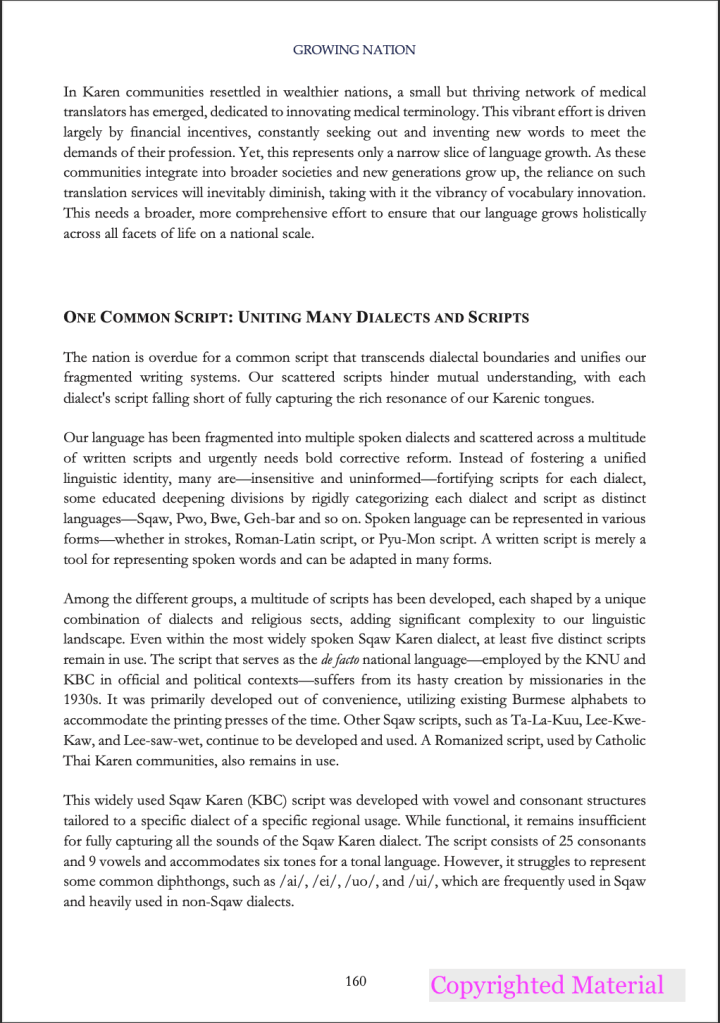
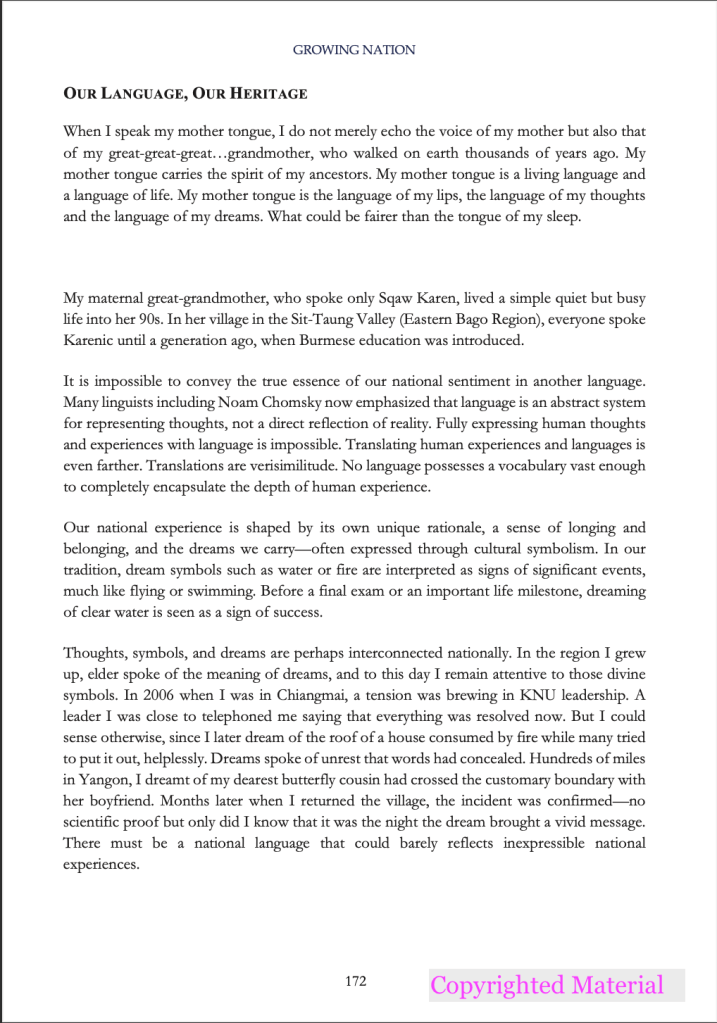
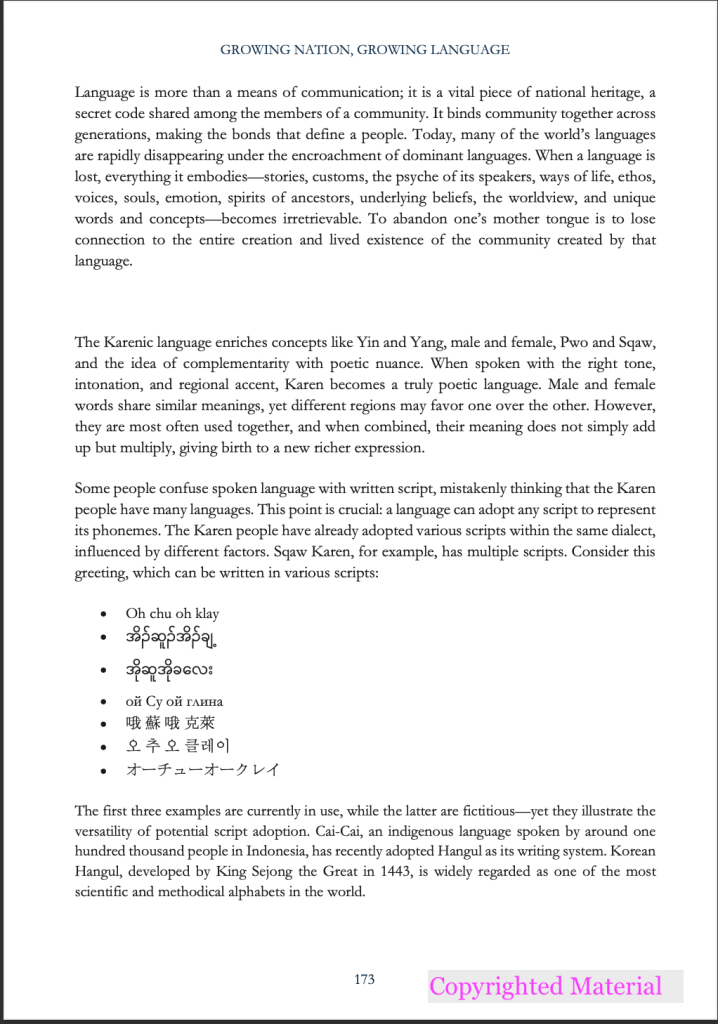
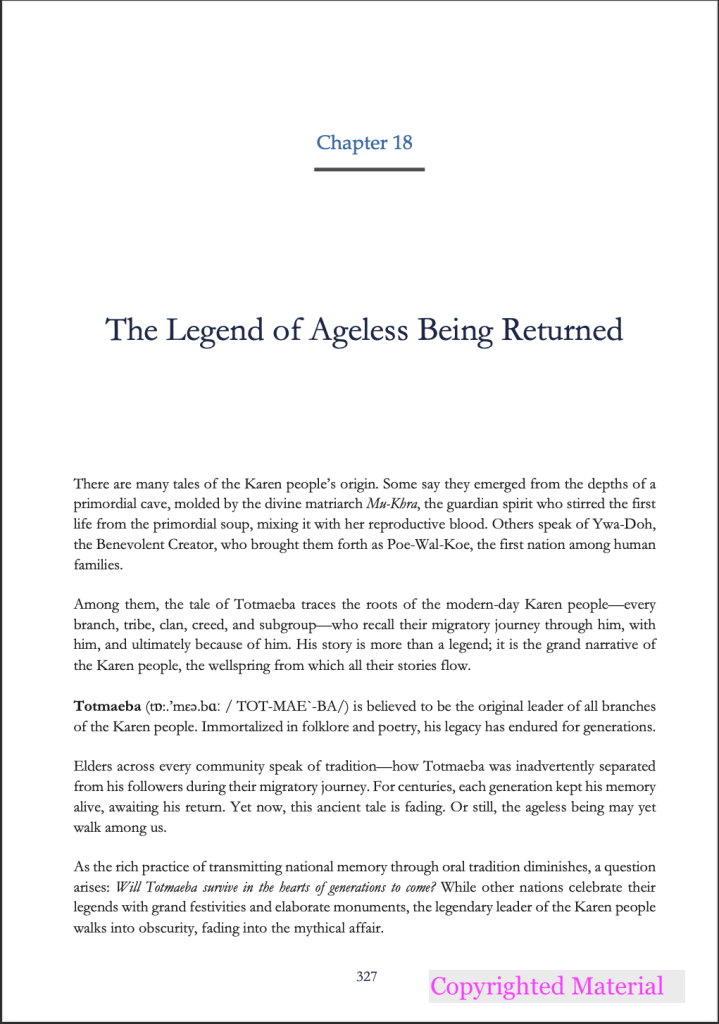
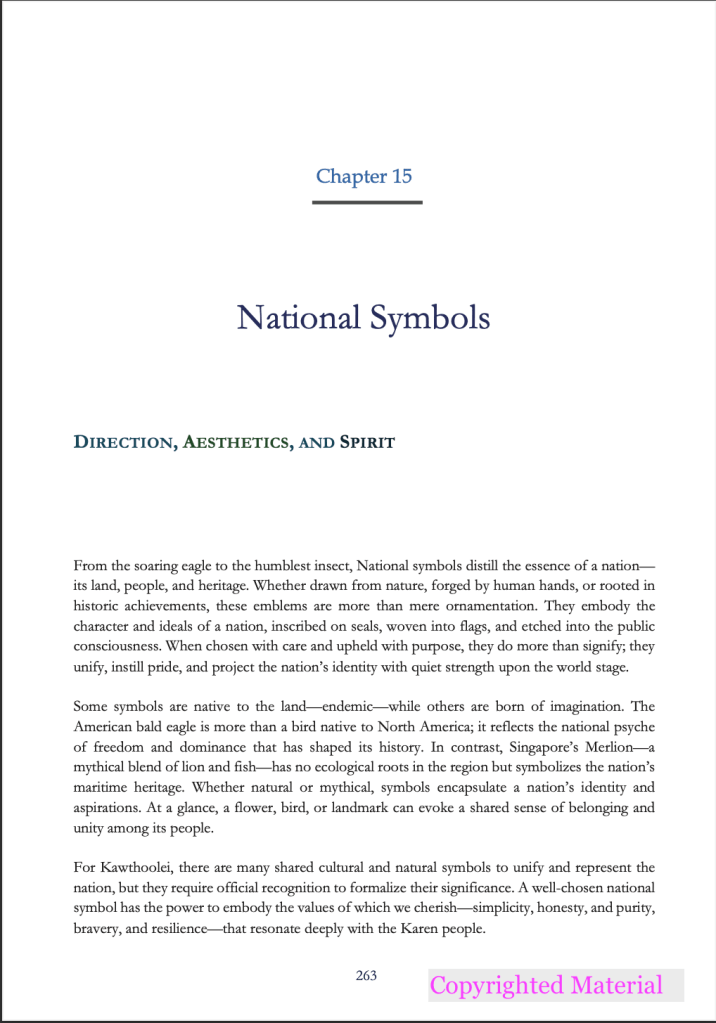
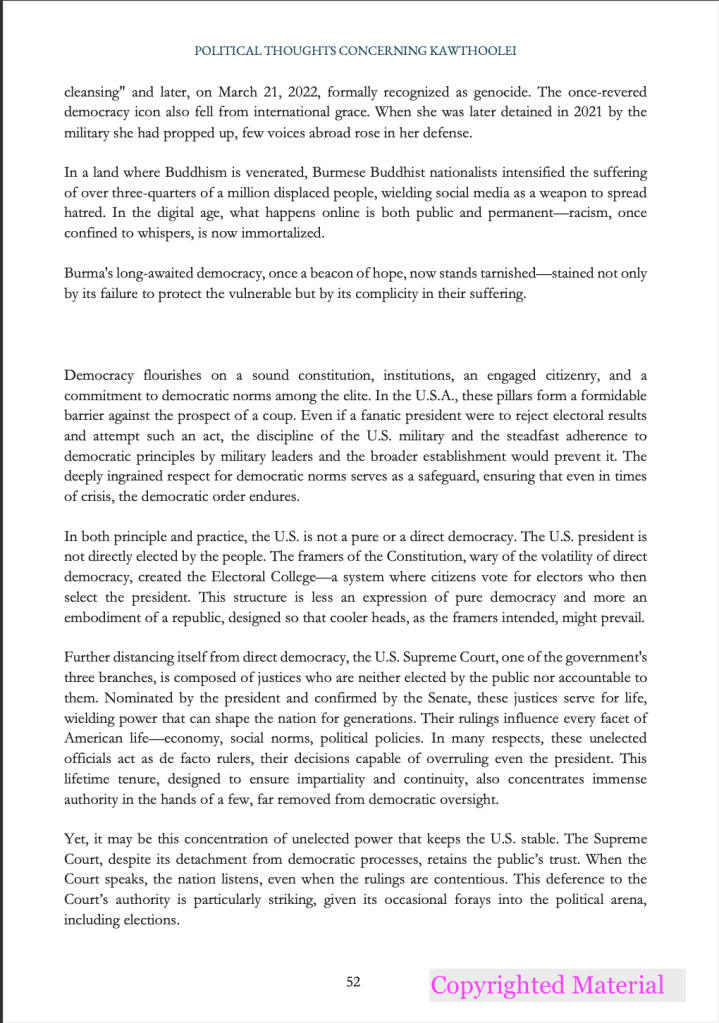
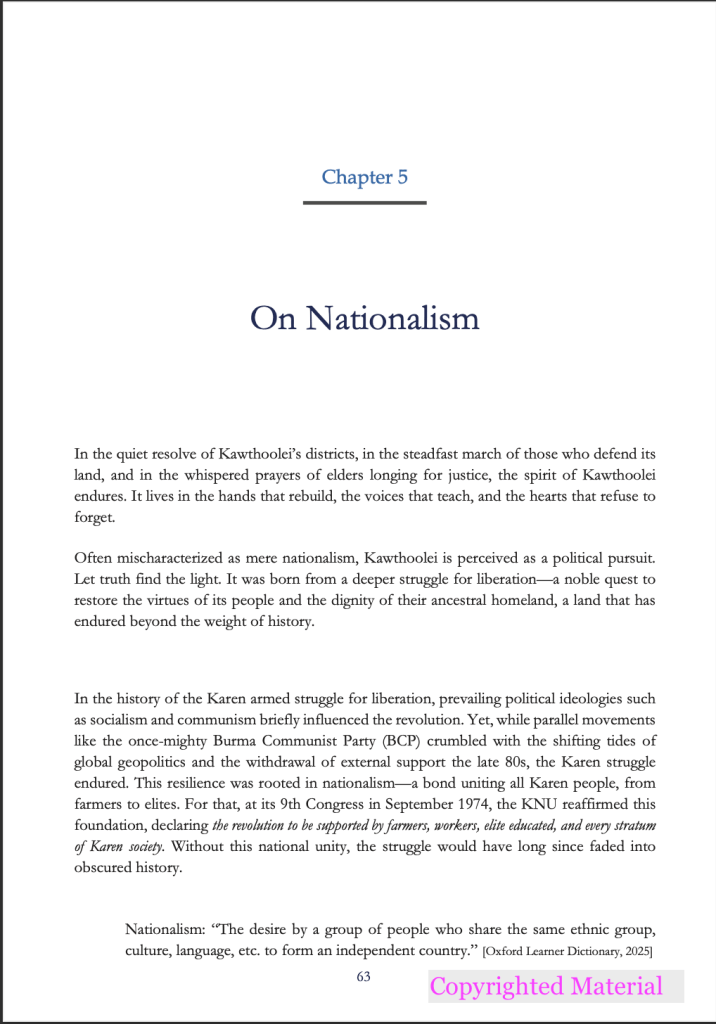
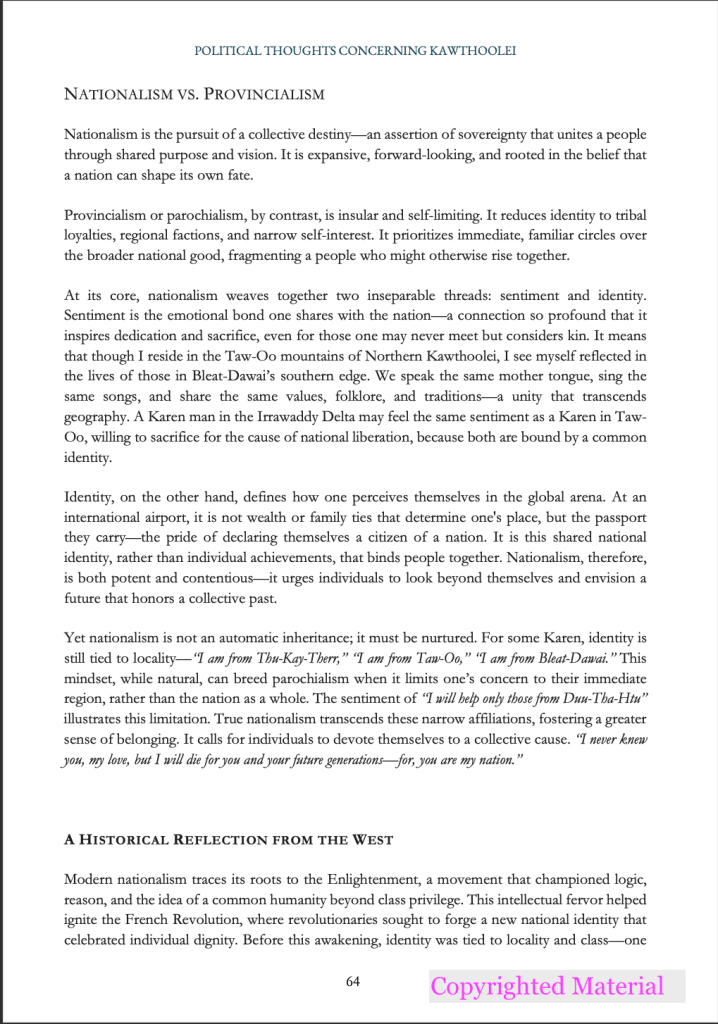
A few sample readings from the introductory pages of selected chapters.
 Likrawkra Publishing